
Your First Breathwork Session: A Beginner's Guide
With breathwork becoming increasingly popular, people are searching for 'breathwork near me' on Google, or asking what happens in a breathwork session, but with so many practitioners out there it can feel overwhelming knowing where to start and who to work with.
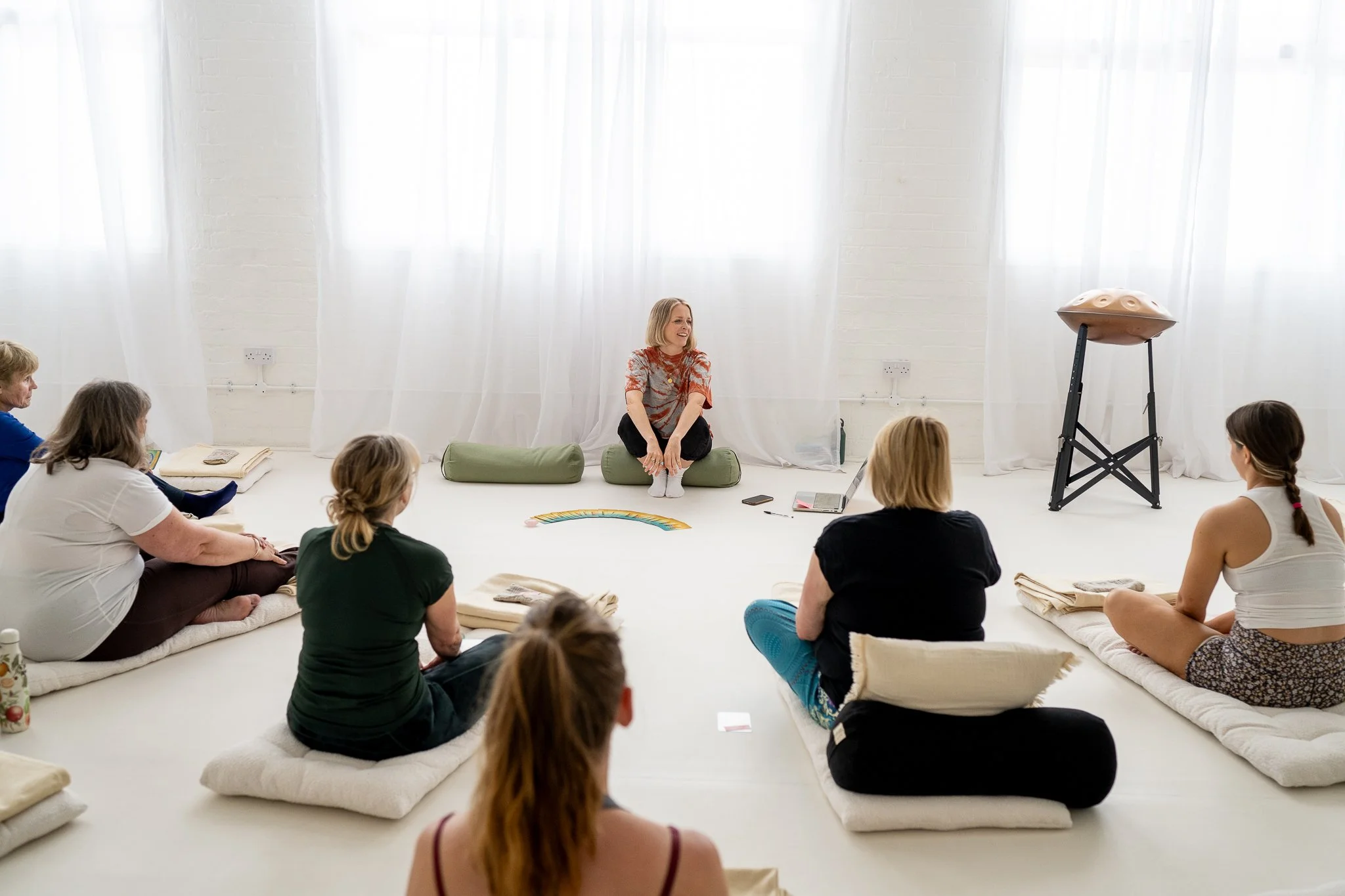
Brenna Duncan, founder of Arise Breathwork leading a Conscious Connected Breathwork Session at NOW Studio Bristol.
Firstly, what is Breathwork?
Breathwork is simply bringing awareness to your breath and then intentionally controlling it to change your state and improve your physical, mental, emotional and spiritual wellbeing. It’s an incredible tool which we all have access to and it’s free. Breathwork has been around for thousands of years, rooted in ancient practices such as yoga, and today is used by many people to support stress reduction, nervous system regulation and personal growth.
Feeling anxious? Extended exhales will activate your parasympathetic nervous system, bringing you into rest and digest mode and creating calm. Need to focus? Try Box Breathing. Feeling tired? Try Kapalbhati, a pranayama technique from India, also known as breath of fire in the West, to bring energy into your body rather than reaching for another coffee when that 3pm slump hits.
Conscious Connected Breathing for Deeper Healing
If you're looking for deeper healing, perhaps you have tension in your body or you know you've repressed things from your past, then conscious connected breathing, or Transformational Breath®, which I'm trained in, could be what you're looking for. It's a somatic practice, which means we're working directly with the body, rather than only the mind. There is now so much evidence and understanding around the connection between the body and the mind. Bessel van der Kolk's The Body Keeps the Score explores this connection beautifully. Gabor Maté is another firm favourite of mine, particularly for his work around trauma, stress and the nervous system.
Conscious connected breathing is a type of breathwork where you breathe in a circular motion, with no pause between your inhale and your exhale. It can take you deep, sometimes into an altered state of consciousness, so it's important to start your practice with a fully qualified facilitator, especially if you are new to breathwork or working with trauma.
How to Choose a Safe Breathwork Facilitator
Check their credentials. No one can safely learn how to hold people in their trauma with a weekend certificate. A good facilitator will have trained for a minimum of 12 months, ideally longer, will have racked up hours of case studies, and be accredited by a certified breathwork school such as Transformational Breath®, Rebirthing, Alchemy of Breath or Seven Directions, to name a few, and should follow clear safety and ethical guidelines.
A huge part of the process is feeling safe. Safe with your facilitator and safe within the space, so you can breathe and let go, which is essential for deeper healing to take place.
What Happens in My Breathwork Sessions
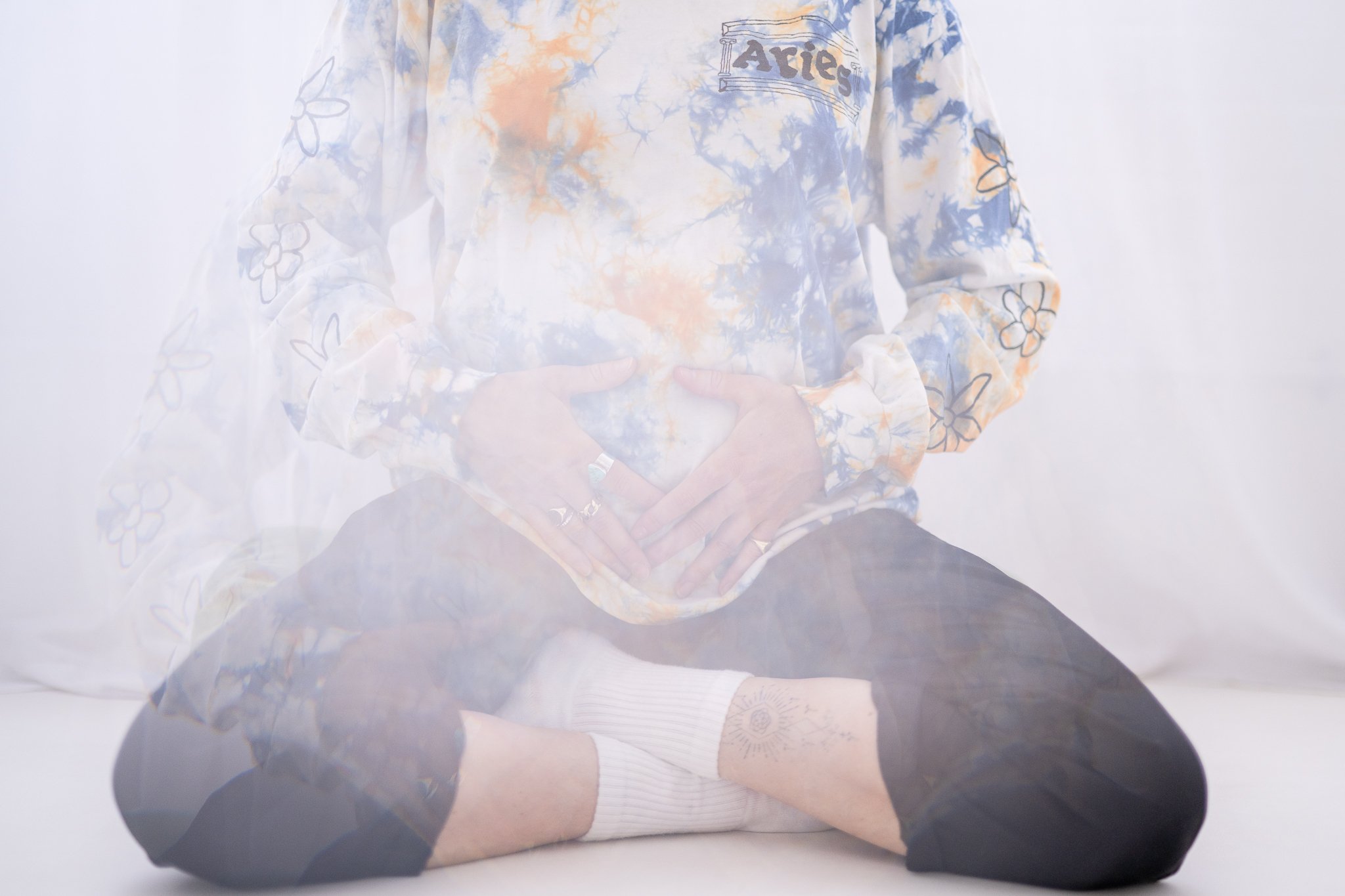
I've been running conscious connected breathwork (Transformational Breath®) sessions for four years now, both in person in London, and occasionally Bristol, and online too. A lovely community has been growing and I'm so grateful to all the regular clients who keep coming back time and time again, whether they are completely new to breathwork or have a regular practice.
Whether you're breathing with me in person one to one, or in a group, online or in person, a big part of what I do is make you feel welcome, supported and held throughout the session. You'll share what's going on with you and how you're feeling at the moment before I explain how to practise the breathwork and demonstrate the technique, so you feel clear and confident before we begin.
The Breathwork Journey
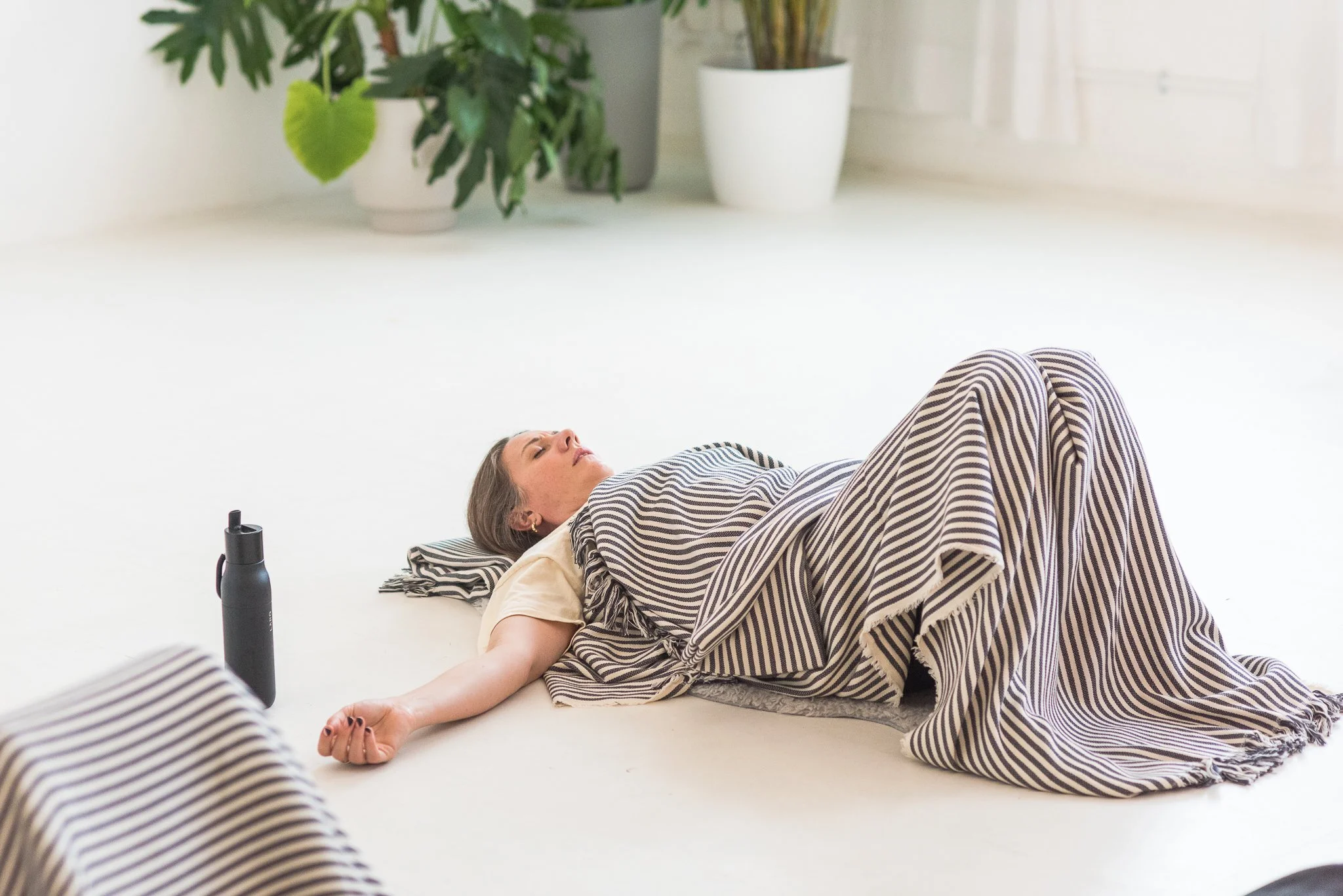
We may begin with some shaking or some gentle movement to an upbeat tune, before you lie down on your mat to breathe. Journeys range from 30 minutes to one hour. We'll usually start with some grounding breaths to help get you out of your head and into your body, so you can fully relax on the mat. Music and my voice will guide your breathwork journey creating a safe and supportive container throughout.
In one to one sessions, I'll look at the way you're breathing and do a breath analysis, which helps me see how you're living your life. It sounds wild, but the way you breathe truly reflects the way you live your life. For example, if your breath isn't coming up into your chest, it may be that you're protecting your heart or scared to let people in. I can often see personality traits reflected in the way someone breathes, which allows the session to be tailored specifically to you.
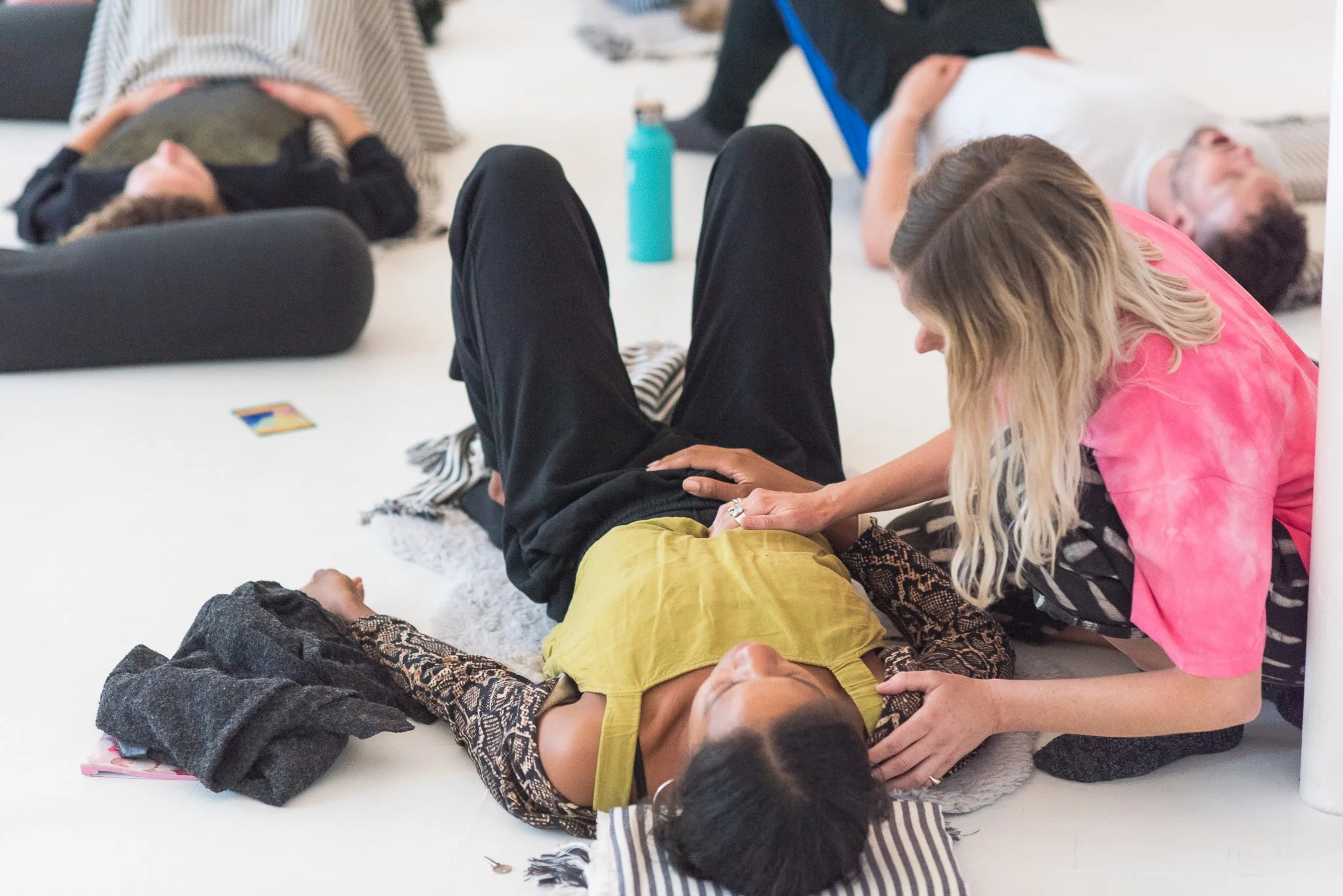
You'll start by breathing in and out through your nose, and we may breathe this way for the entire session. If I feel it's appropriate for you and your nervous system, we may move into conscious connected mouth breathing. Throughout your session, if it's in person, I will use acupressure points (if you’re ok with touch), bodywork and affirmations to help open up your breath and encourage it to flow into all areas. If you're breathing online, I may guide you to certain acupressure points for you to work with yourself, so you still feel supported even from home.
What You Might Experience During Breathwork
As you're breathing, you might feel physical sensations such as energy moving through your body, tingles, light headedness, numbness, tightness, shaking, or feeling hot or cold. Don't worry, it's unlikely you'll feel all of these things at once. These sensations are a normal response to changes in breathing and nervous system activation.
You might also feel emotions rising up, such as sadness, anger, grief, or sometimes even joy. I always encourage you to welcome these in a curious and loving way and allow them to be present, whatever they may be. Sometimes people laugh, cry, yawn or cough. Other people can have more spiritual or mystical experiences, sometimes connecting with loved ones they've lost or feeling a connection to something greater than themselves. I always encourage an open heart and open mind when breathing and to trust whatever comes up without judgement or expectation.
Sometimes people find it hard, especially those who spend a lot of time in their busy minds, to drop into their body. Perfectionist types are often thinking “am I doing it right?” which can distract from the actual breathing. You'll always get something out of a breathwork session, but it's a good idea to let go of expectations as much as you can, and trust that your body knows what it needs.
Lots of practitioners focus heavily on big cathartic releases, but sometimes the most powerful sessions don't involve crying or releasing lots of emotion. People can have beautiful insights, memories or even visions come to them. Each time, they learn something new about themselves, and this is actually the most important part of breathwork: the integration.
Integration: The Most Important Part
Integration happens at the end of a session and in the days that follow. I'll always allow around 15 minutes after the conscious connected breathwork to let your breath return to normal and to simply be still. Often people go really deep at this point and can feel super present, calm, and experience feelings of bliss, joy and oneness. Occasionally people fall asleep! There's no right or wrong, just learning to trust your body and allow it to do what it needs to do.
In the days that follow, you might notice emotions coming up. It's a good idea to journal after your session, spend some time in nature, or talk it through with a friend, or me if you need additional support. The experience can sometimes feel dreamlike and details may fade quickly. Ask yourself: how did you feel before and after your session? Were there any insights that arose? What did you learn about yourself? This is all part of self enquiry and developing a deeper understanding of yourself, which helps the benefits of breathwork continue beyond the session itself.

What to Bring to Your Breathwork Session
All you need for your breathwork journey is:
Comfy clothes, ideally loose around your waist
Water bottle
Journal and pen
If you're joining online:
A speaker or headphones to fully immerse yourself in the session
Yoga mat
Pillow and cosy blanket (it's common to feel cold during a session)
Bolster and eye mask (optional)
Tissues nearby
Light a candle (optional)
Breathwork Contraindications and Safety
There are some contraindications for breathwork, so it's important to check these beforehand and speak to your facilitator. A well trained facilitator should always check your medical history before you breathe. If they don't, this is a huge red flag. Breathwork is not a replacement for medical or psychological treatment, and if you have any concerns, please speak to your GP or healthcare professional before taking part.
Ready to Try Breathwork?
Feeling curious and would like to try? Find out more about my 1-2-1 sessions (online and in London), group workshops, retreats and online courses here, and take the first step into your breathwork journey.
Would love to breathe with you.